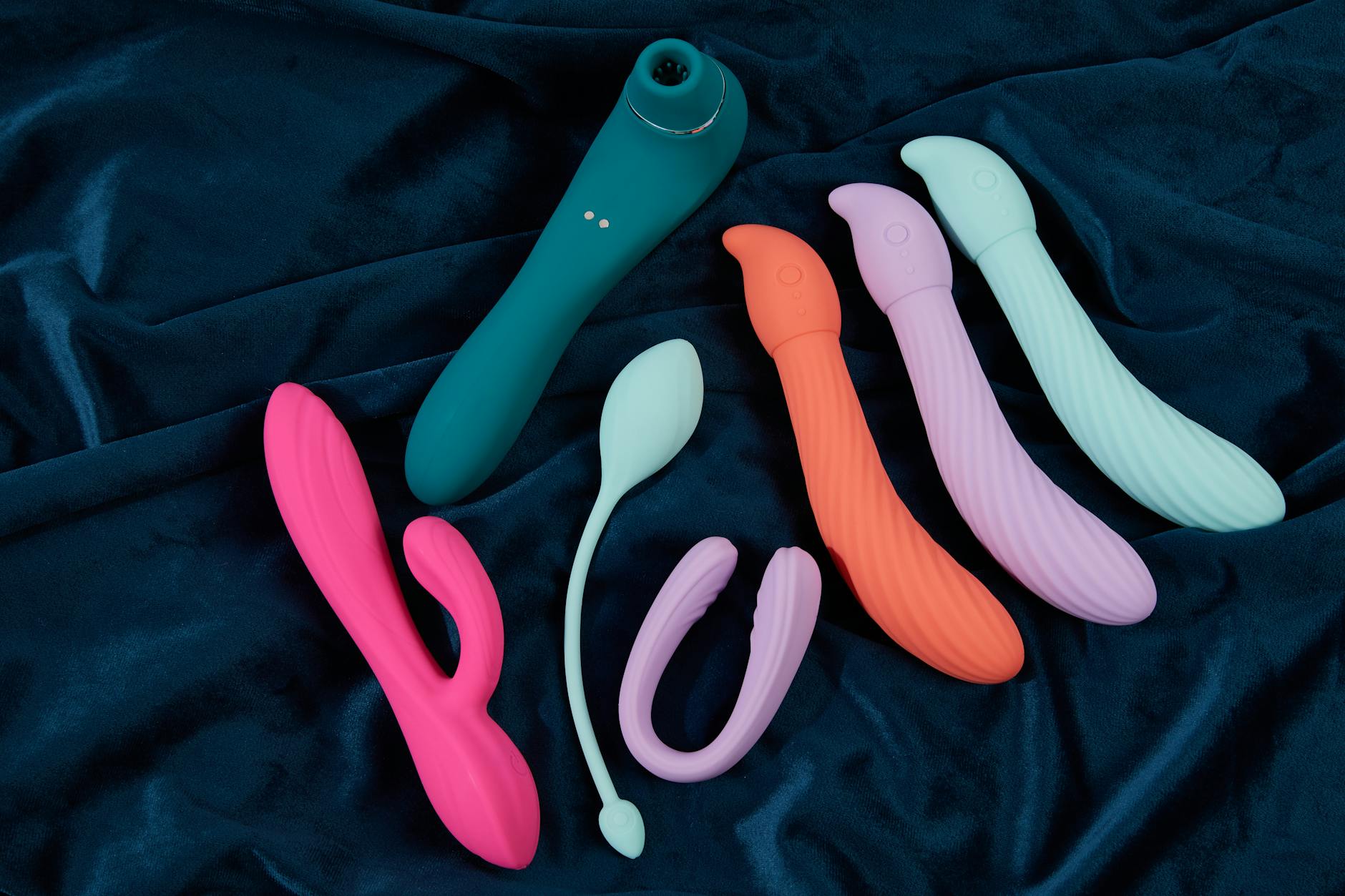
Your pleasure map changes every month
Honestly, we're not taught this. You probably grew up assuming your body wanted roughly the same thing every single day, and that if it didn't, something was wrong. Here's the thing: it's not wrong. It's hormonal, it's normal, and once you understand the pattern, your lemon vibrator becomes wildly more effective.
Estrogen and testosterone fluctuate dramatically across your menstrual cycle. These hormones directly affect clitoral sensitivity, arousal speed, and orgasm intensity. A setting that feels perfect on day 8 might feel too intense on day 21. Knowing this isn't just interesting biology. It changes how you use your lemon vibrator and whether you actually enjoy it.
The follicular phase (days 1-13 ish): Lower sensitivity, longer warm-up
During the follicular phase, estrogen is climbing but still relatively low. Your clitoris is less engorged. Arousal takes longer to build. This is not a limitation. It's just the current state.
What this means for your lemon vibrator practice:
Start lower than you think. If you usually begin on pattern 3, try pattern 1 or 2. Your tissues are less swollen, so the same vibration feels more intense than it will later in the cycle. This is where patience pays off. Spend 10-15 minutes building arousal before moving to higher patterns.
Extend your warm-up. Use the lemon vibrator on lower settings for longer than usual. The point isn't to rush to orgasm. It's to give your body time to respond. Many people find that this phase rewards longer, slower sessions.
Layer in other sensations. Because direct clitoral stimulation requires more patience here, combine it with other touch. Use your free hand on your inner thighs, breasts, or anywhere that feels good. The cumulative effect builds arousal faster than the vibrator alone.
Here's the counterintuitive part: many people experience some of their most satisfying orgasms during the follicular phase, even though it takes longer. There's less urgency, which can paradoxically make the experience more present.
The ovulatory phase (days 14-16 ish): Peak sensitivity and intensity
Right around ovulation, estrogen and testosterone spike simultaneously. Your clitoris engorges with blood. You become significantly more sensitive. This is when your lemon vibrator can go higher, faster, and harder than any other time in your cycle.
What changes here:
Higher patterns feel right. You can move to pattern 4, 5, or even max settings faster than other phases. Your tissues can handle it. Your nervous system wants it.
Shorter warm-up window. Arousal builds quickly during ovulation. You might need only 5-10 minutes of buildup before you're ready for intense stimulation. Don't force a long warm-up if it doesn't match your body. Follow what feels good.
Intensity becomes pleasure. This is also the phase where many people experience the strongest, most explosive orgasms. If you've ever noticed that your pleasure response feels dramatically different at certain times, ovulation is likely the reason.
Experiment with patterns. This is the ideal time to try new patterns or settings you usually avoid because they feel too intense. Your body is literally designed to handle more sensation right now. Some people discover new favorite patterns during ovulation and then wonder why they don't feel as good two weeks later. Cycle phase. That's why.
If you're trying to understand what your lemon vibrator is truly capable of, do it during ovulation. That's your body's baseline for maximum pleasure.
The luteal phase (days 17-28 ish): Variable sensitivity and emotional texture
After ovulation, progesterone rises and estrogen drops. This is the longest phase, and it's also the most unpredictable because your hormones are shifting across multiple weeks.
Early luteal (days 17-21) often mirrors late follicular. You might notice sensitivity dropping again, arousal taking longer, and your usual high-intensity patterns feeling suddenly too much. This is normal. Your hormones are recalibrating.
Late luteal (days 22-28, before your period) can feel weird. Some people experience heightened sensitivity again, but with a different quality. The pleasure might feel sharper, more localized, or emotionally intense. Some people want more vibration. Others want less. The variability is the point.
Track what works. Keep a simple note of which patterns feel best on which days. After two or three cycles, patterns emerge. You'll know that days 22-24 need pattern 2, but day 26 wants pattern 4. This isn't failure to adapt. This is you getting smarter about your own body.
Honor the emotional component. Pleasure in the luteal phase often carries emotional weight that other phases don't. You might notice you want longer, slower sessions, or you want to use your lemon vibrator specifically to relax rather than to chase intensity. Both are valid. The luteal phase is when pleasure and self-soothing overlap.
Expect some sessions to feel flat. In late luteal, some people find their usual techniques just don't land the same way. This isn't your clitoral vibrator failing. It's your hormones. Sometimes the kindest thing you can do is use a lower pattern, keep it shorter, or skip a day entirely. Forcing pleasure during a phase when your body isn't interested is counterproductive.
Menstruation (days 1-5 ish): Individual variability dominates
During your period, hormones are at their lowest. Pain or discomfort varies wildly from person to person and even cycle to cycle. Some people find that using their lemon vibrator during menstruation feels amazing and helps with cramps. Others find touch feels completely off-limits.
There's no universal rule here. Your nervous system is the only authority. If using your clitoral vibrator during menstruation feels good, use it. If it feels wrong, don't. The only wrong choice is pushing through when your body is saying no.
One note: if you do use your lemon vibrator during your period, stay with lower patterns and gentler stimulation than you might use in other phases. Pelvic sensitivity can be elevated, and gentleness often produces better results.
Practical tracking: How to know where you are
You don't need an app or a chart, though those help if you like them. You just need to notice: Am I aroused quickly or slowly right now? Does my usual pattern feel too intense or not quite enough? Am I in the mood for fast pleasure or slow exploration?
These questions answer themselves after one or two cycles. Your body will tell you where you are hormonally if you listen.
When external factors throw the pattern off
Stress, travel, sleep deprivation, and illness can disrupt your cycle or shift your sensitivity independent of hormones. If your lemon vibrator suddenly feels different and you're not sure why, check the obvious things first: Am I stressed? Did I sleep poorly? Am I sick? Sometimes the answer is hormonal. Sometimes it's just life.
If you're on hormonal birth control, your cycle might be suppressed or regulated differently. This doesn't mean you can't use these patterns. It just means your peaks and valleys might be flatter or shifted. Pay attention to what actually happens with your body rather than to what the textbook says should happen.
Similarly, if you're navigating perimenopause or menopause, these phases might feel less predictable or shift significantly. The core principle still applies: pay attention to what your body is doing right now, and adjust your lemon vibrator accordingly.
The point of paying attention
Learning to sync your lemon vibrator use with your cycle isn't about performance or optimization. It's about reducing frustration and increasing pleasure. When you stop assuming your body should want the same thing every day and start responding to what it actually needs, using your clitoral vibrator stops feeling like a guessing game.
You'll know why some sessions feel incredible and others feel flat. You'll know why a pattern that usually works suddenly doesn't. You'll understand your own arousal pattern deeply enough to work with it instead of against it.
That knowledge is powerful. It also makes pleasure more consistent, more satisfying, and more genuinely yours.
FAQ
Can I use my lemon vibrator throughout my entire cycle?
Absolutely. The point isn't that certain phases are off-limits. It's that your approach changes. You adjust intensity, warm-up time, and session length based on where you are hormonally. Some phases reward intensity. Others reward patience. Both are worth exploring.
What if my cycle is irregular or I'm not sure where I am?
Track two or three cycles by noting sensitivity changes and arousal speed. Patterns usually emerge. If your cycle is genuinely irregular, try noticing your baseline sensitivity and adjusting your lemon clitoral vibrator accordingly. Lower sensitivity means starting lower. Higher sensitivity means you can go higher faster. Your body will give you the information you need.
Does hormonal birth control change how my lemon vibrator feels?
Yes, often significantly. Some birth control methods suppress hormonal fluctuations entirely, which can flatten your sensitivity peaks and valleys. You might notice that intensity feels more consistent across the month, but also that your peak arousal never gets quite as high. Others find their pleasure barely changes. The only way to know is to pay attention to your actual experience.
Can I use patterns that feel uncomfortably intense if I'm in a high-sensitivity phase?
Technically, yes. But why would you? High sensitivity means lower patterns feel incredible. You don't need to push to higher patterns to feel good. Save the max settings for when your body is actually ready for them.
What if tracking my cycle feels like too much work?
You don't need to track formally. You just need to notice. "Does my body want this intensity right now?" is the only question that matters. After a couple of cycles, you'll know the answer without thinking about it.
How do lemon sucker technology and pattern variation work with cycle syncing?
The suction-based approach of a lemon vibrator naturally pairs well with cycle awareness because it allows for graduated intensity without harsh direct vibration. During lower-sensitivity phases, gentler suction patterns feel more accessible. During high-sensitivity phases, you can layer patterns or intensity to match what your body is requesting. The flexibility of your lemon clitoral vibrator means you can always find a setting that matches your current phase.
What if I notice my orgasm quality changes across my cycle?
It should. Orgasms during ovulation tend to feel stronger and more full-body. Orgasms during the follicular phase often feel more localized or gradual. Neither is better. They're just different expressions of your nervous system responding to different hormonal states. Knowing this prevents you from deciding that orgasms feel worse when they're just different.
Should I avoid my lemon vibrator during certain phases?
Not unless your body is actively telling you to. Some people genuinely don't want any kind of stimulation during their period or late luteal phase. Others use their lemon vibrator during these phases specifically for stress relief or sensation. Neither approach is wrong. The rule is always: if your body says no, listen.
Your cycle is not a limitation
Most of us learned to ignore our cycles or treat them as obstacles. Integrating your lemon vibrator use with your actual hormonal reality is the opposite of that. It's honoring what your body is actually doing and working with it instead of pretending it's static.
Pay attention. Adjust. Notice what works. Your pleasure will thank you for it. And if you're looking for additional guidance on sensitivity management, Hello Nancy has resources for that too.